
What the Farm Grows Besides Flowers
Value Added, But Not for Sale
A flower farm has obvious crops: stems, bouquets, buckets, seeds, roots.
But there is another kind of yield here too — the kind that does not go in a vase, does not fit on a price sheet, and is not for sale.
This spring and early summer, that other yield has looked like crane colts in the field, fawns in the white clover, caterpillars tucked into leaves, raccoon kits with questionable manners, fledgling birds around the house, and young ravens adding their awkward clamor to the tree line.
It started, at least in my mind, with a doe who seemed to decide our yard was a perfectly acceptable fawn daycare.
The first time she left her fawn near the house, she actually poked her head right up to the bedroom window. Sierra was still in bed, and I think the doe scared her about as much as Sierra startled the doe. For a second, it felt like the deer was saying, “Your turn. I’ll be back later.”
And honestly, what are you supposed to do when a deer assigns your household daycare duty?
For a while, we saw fawns almost every day. Quiet little shapes in the grass. Long legs figuring themselves out. A mother moving through the yard like she knew exactly what she was doing.
And she probably did.
A few days later, we saw at least three fawns tucked into the garden with a group of mothers, right in the middle of what is, at the moment, apparently our most productive crop: white clover.
It is hard to complain too much. A flower farm is supposed to grow beauty, and sometimes beauty looks like spotted fawns folded into the green, pretending very seriously that nobody can see them.
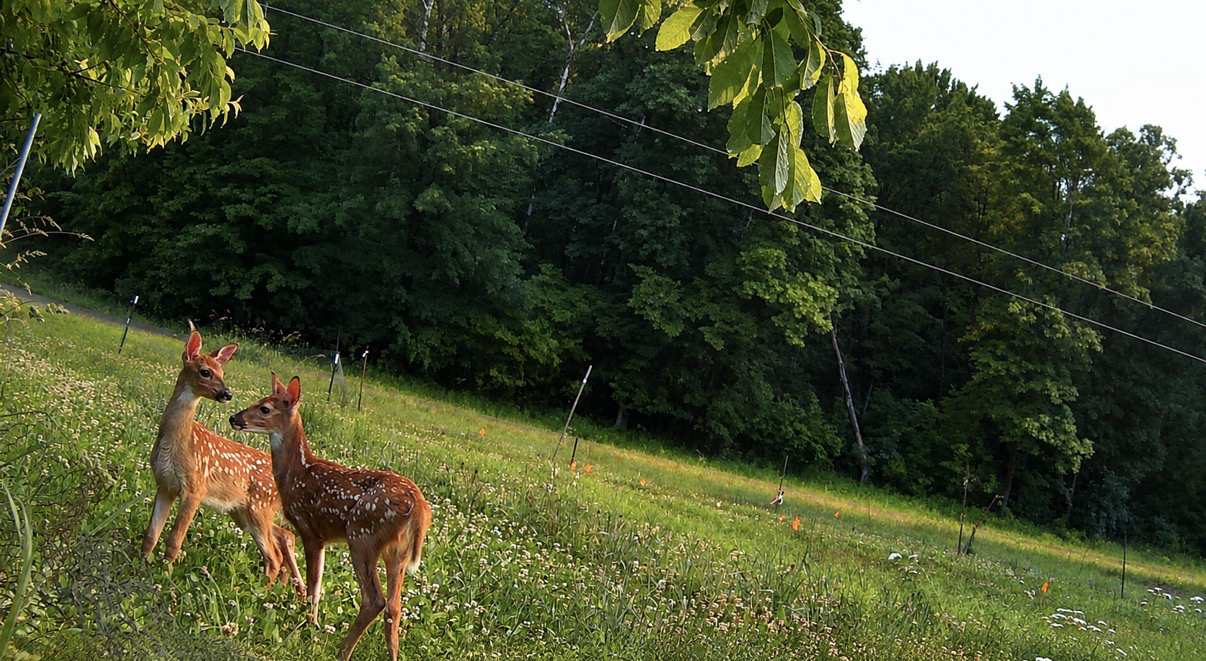
Twin fawns enjoying a buffet of white clover
The sandhill cranes have been raising their own young in the field, too. There is something wonderfully ancient-looking about crane colts following their parents through the grass — small, fuzzy, and somehow already carrying themselves like they belong to a much older world.
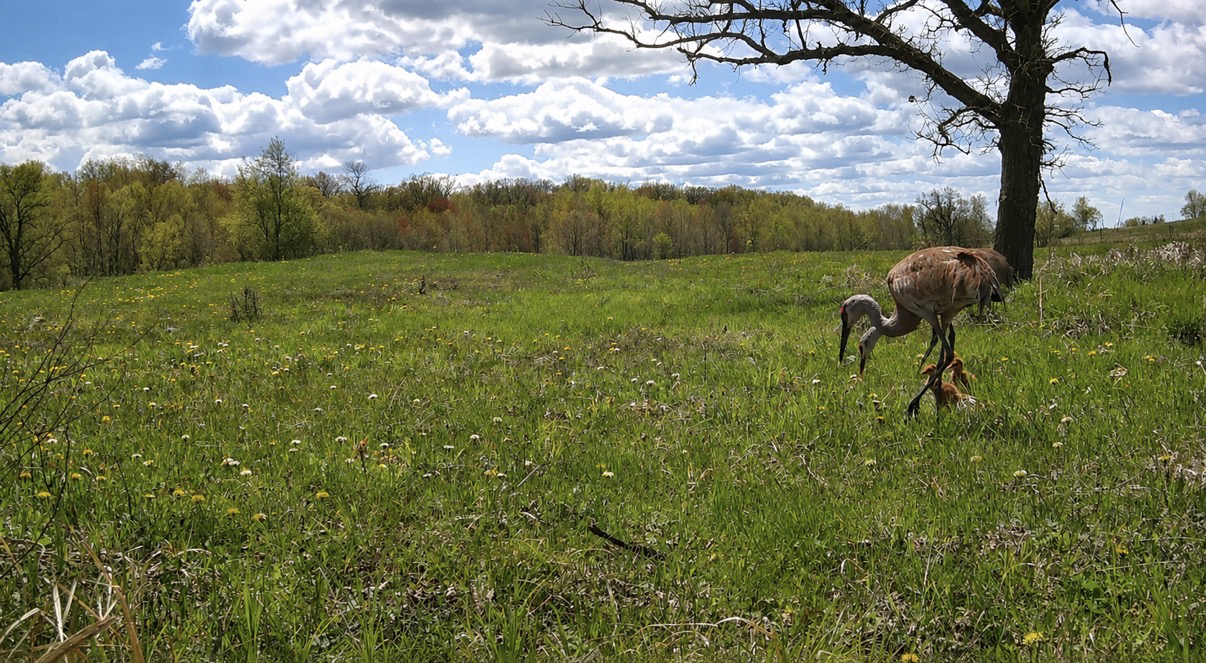
Colts out to explore.
The baby bunnies have been loitering with our flock of ducks, making the yard look briefly, absurdly, like an Easter card.
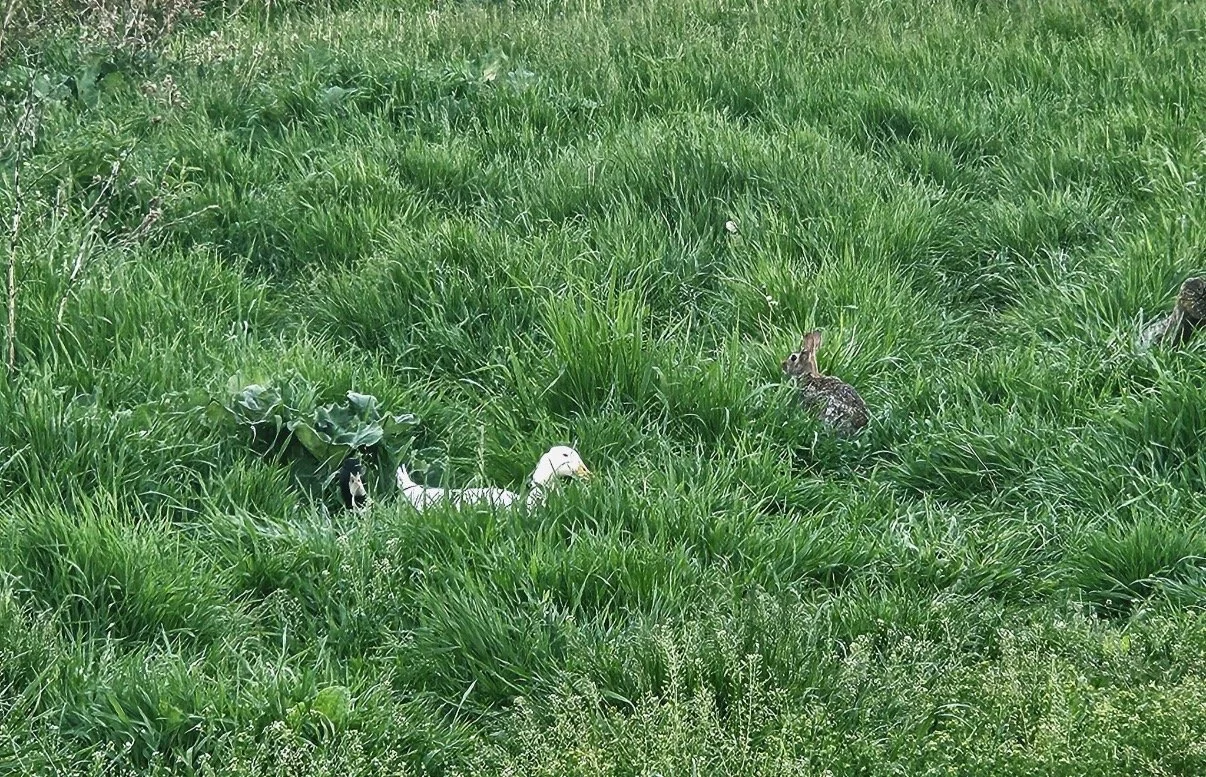
Pair of ducks sun bathing with a baby bunny
Baby chipmunks have been running all around the house. Fledgling robins and sparrows are out in the yard. Those are just the ones we see. From all the nesting sites around the farm, we hope there are baby bluebirds, orioles, and maybe even hummingbirds tucked into the summer somewhere too.
And then there is the newest member of the Air Force: a baby pigeon, barely hatched, already part of the farm’s ongoing bird department.
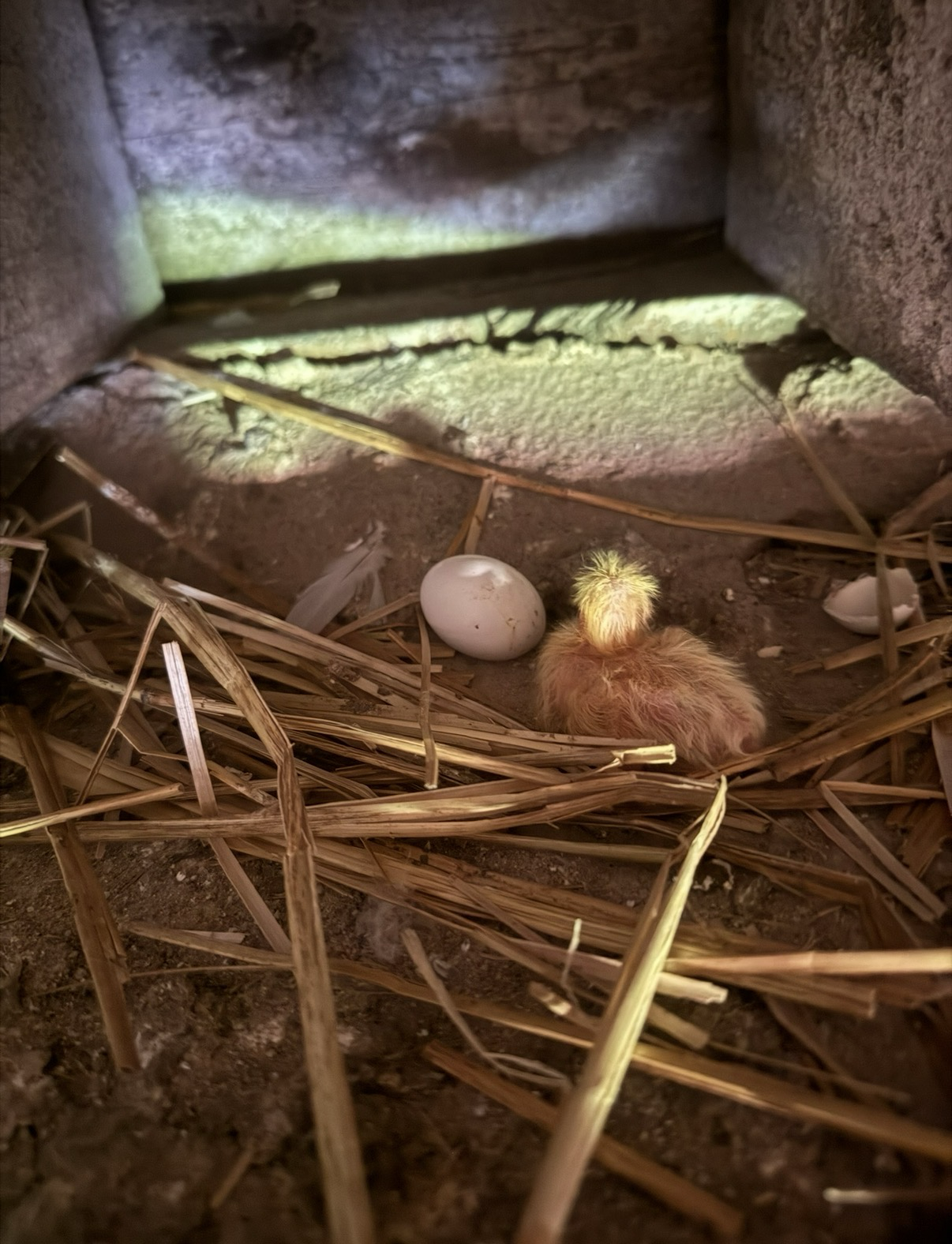
New member of the pigeon air force
Most years, we also get a mother raccoon who brings her babies to party in our pole shed before dark. They are adorable and destructive, and we love them in the complicated way you love something that may also rearrange your belongings. They have not started that tradition yet this year. Given that the chickens live nearby in the barn, that is probably not the worst news.
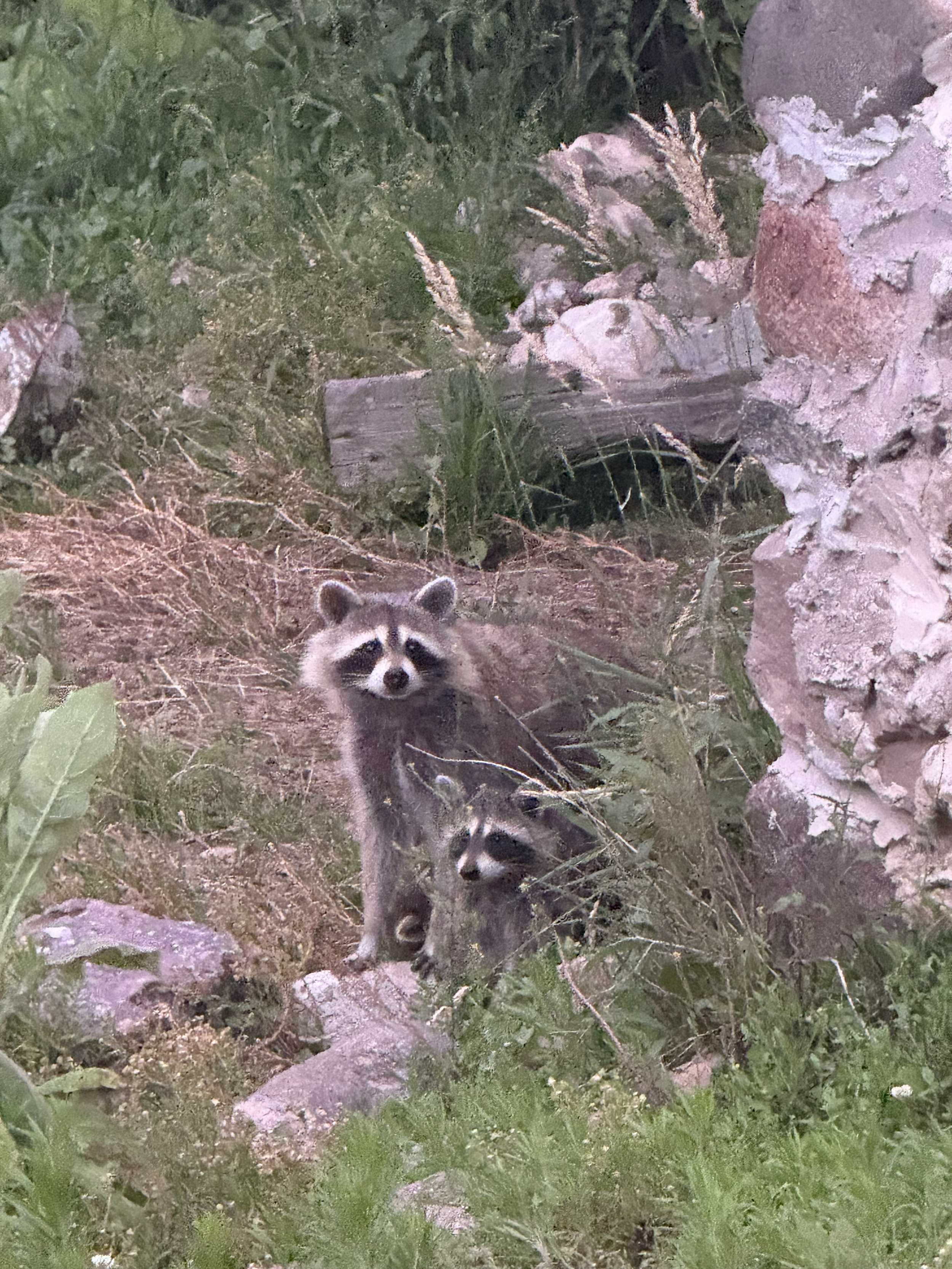
Mom keeping her kits close
That is one of the strange, beautiful parts of living on a farm like this. We are not the only ones using the land. The field edges, tall grass, wetlands, brushy corners, flowers, weeds, and messy places all become part of somebody’s nursery.
Some of the young life is easy to notice. Fawns in the yard. Colts in the field. Raccoon kits looking like they have already made a plan and it is not a good one.
Others ask you to look a little closer.
This spring we have also been finding caterpillars and larvae tucked into leaves, doing the quiet work of becoming something else. They are not always the most obvious part of a flower farm, but they are just as important. A healthy farm should have chewed leaves. It should have insects. It should have small things eating, growing, hiding, changing, and feeding something else.
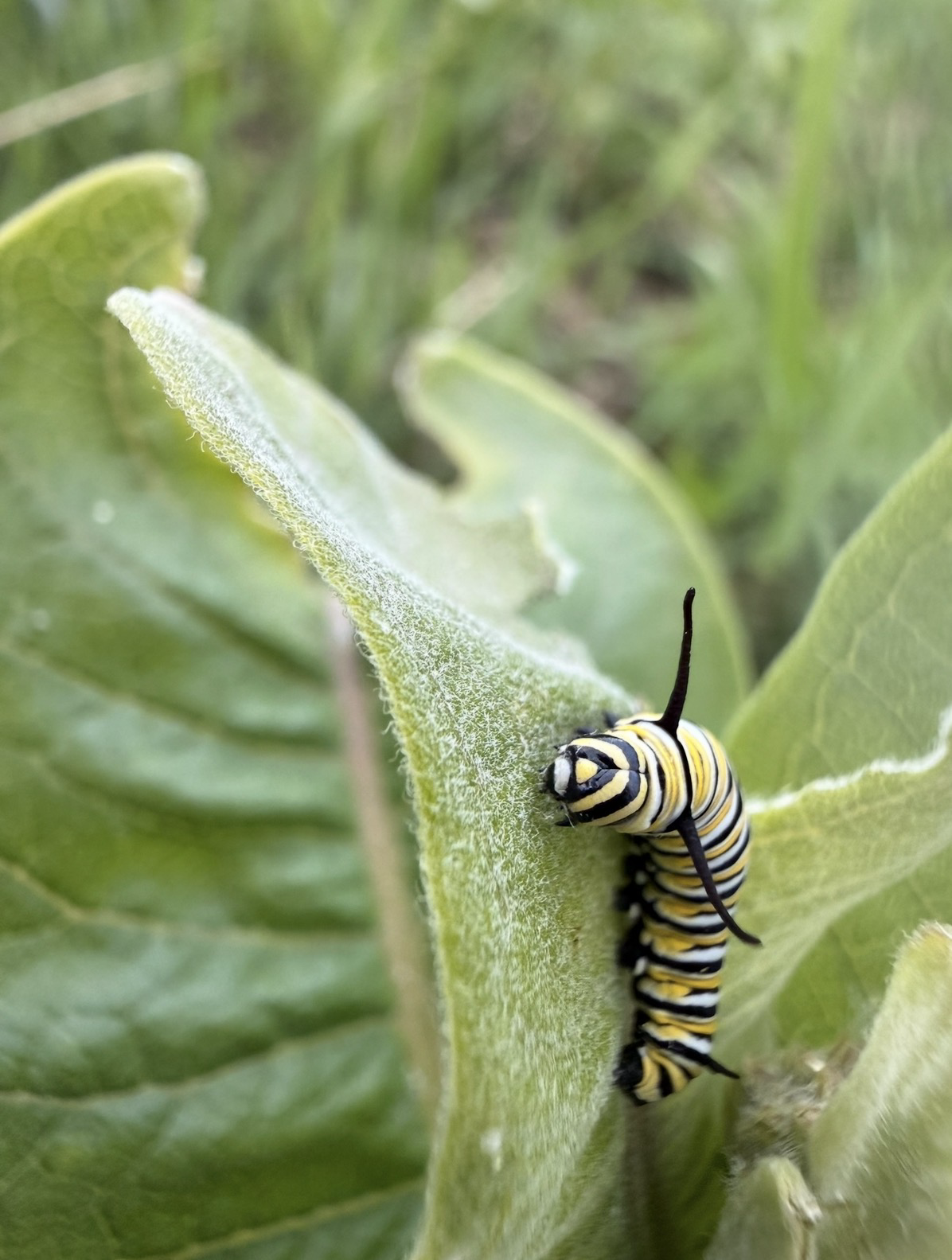
monarch caterpillar on milkweed
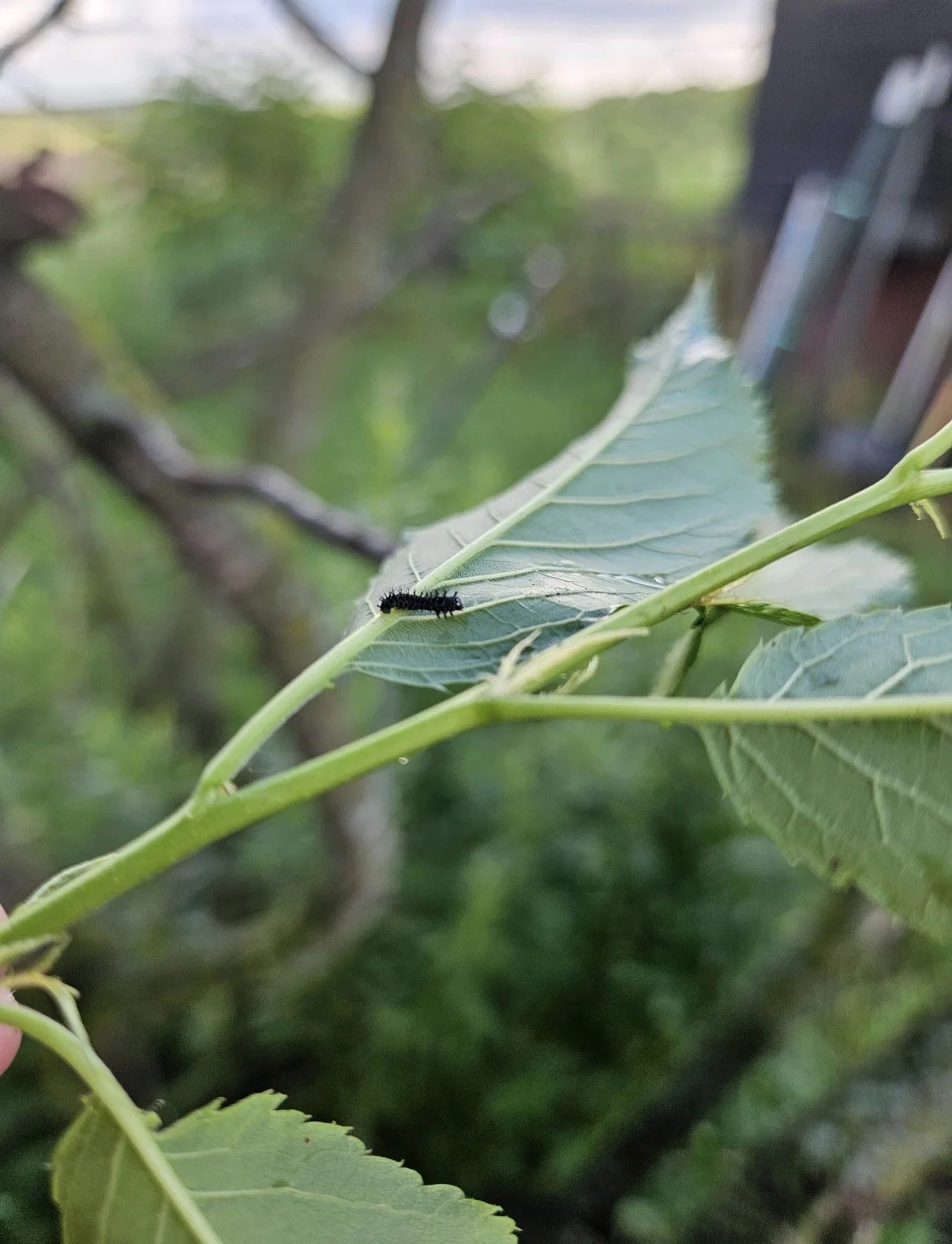
Newly hatched cecropia caterpillar
One day we found a spectacular moth in the shade house. At first, it seemed like one very impressive visitor. Then I went and got Sarah, and she noticed there were actually two of them — and they were mating.
I believe they were cecropia moths, one of those creatures that feels almost too elaborate to be real. They do not get much time as adult moths. By the time they have those huge patterned wings, their work is mostly to find each other, mate, and lay eggs.
The next day, we found the eggs. We moved them out to the wild plum grove, then let the moths out of the shade house so they could spend their short time as beautiful moths around the yard.
There is something very humbling about that: a whole year of becoming, and then only a brief window to fly.
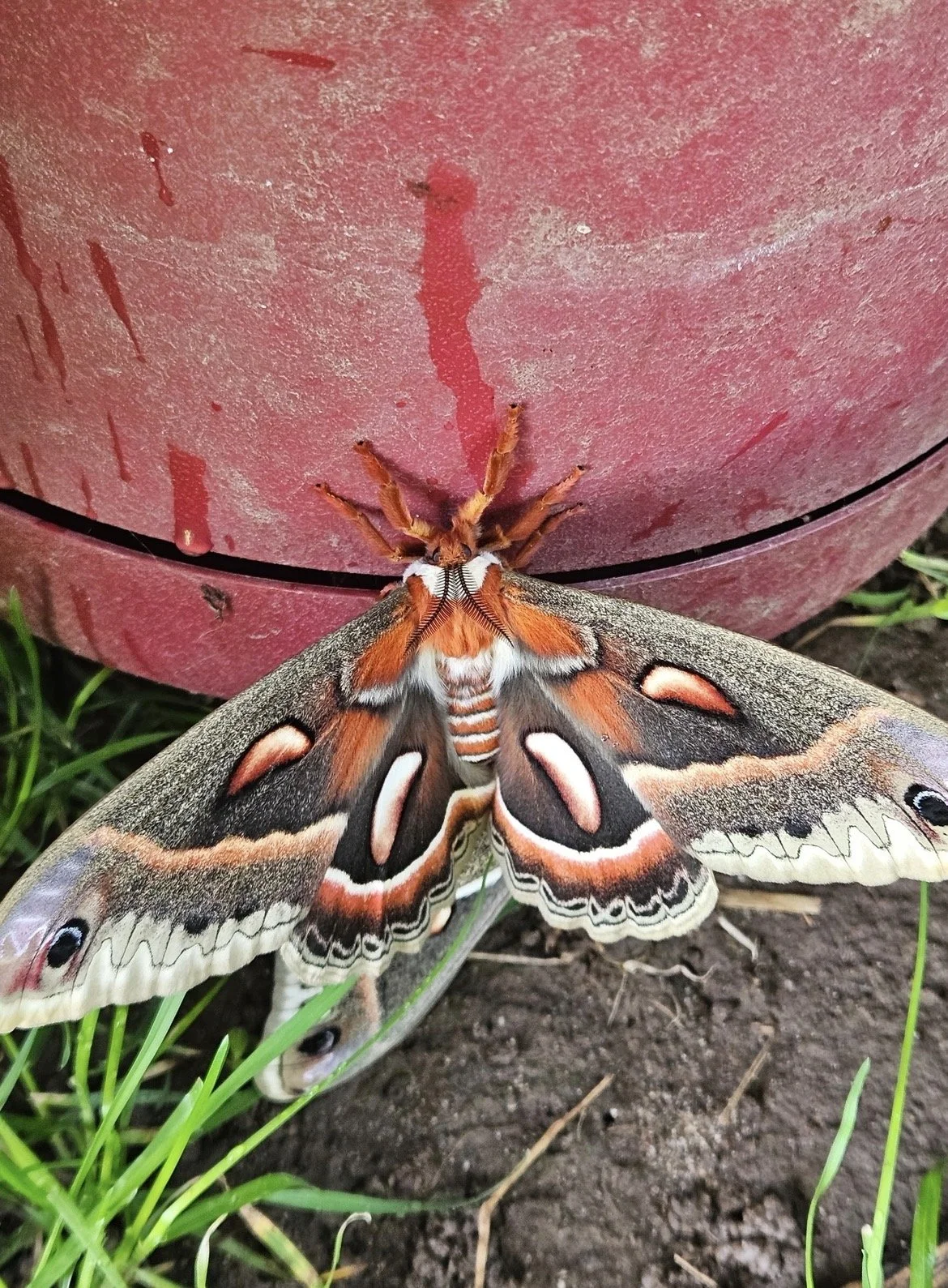
cecropia moth
The raven fledglings are out now, too, and apparently that has shifted the local politics. With a whole horde of young ravens making noise in the trees, the ravens seem to have pushed their territory line back again in the ongoing dispute with the crows.
The last few days have been full of strange calls, begging sounds, arguments, warnings, and whatever else passes for neighborhood meetings in the corvid world. It is not exactly peaceful, but it does make the farm feel intensely alive.
We have had a few other signs of young life around the edges, too — baby woodcock nearby, and reports of baby owls in the neighborhood. I will not claim every nest and fledgling as ours, but it does feel like the whole hill has entered nursery season.
That is what I keep coming back to this year. Firefly Hill is a flower farm, but the flowers are only one piece of the story.
We grow bouquets here, but we are also trying to grow habitat. We want this place to be beautiful in a way that lasts beyond a vase. Beautiful for pollinators. Beautiful for birds. Beautiful for deer moving through at dawn, cranes calling from the field, caterpillars hiding under leaves, and fireflies rising from the grass at night.
Not every part of nature is soft or simple. Sometimes the value-added crop chews the leaves. Sometimes it makes a racket in the tree line. Sometimes it tries to move into the pole shed. Sometimes it stands in the garden and eats the white clover like it has every right to be there.
And maybe it does.
The farm grows flowers, but it also grows shelter, food, cover, noise, mess, motion, and new life.
None of that fits very neatly on a price sheet.
But it is still part of the yield.