

Late-Season Bouquets at Firefly Hill Farm
As October rolls in and most growers start to wind down for the season, Firefly Hill Farm is still hitting its stride. The cool air, softer light, and deeper tones of fall bring out a new rhythm in the field. Many of my favorite stems are just reaching their peak, letting me create distinctive bouquets that bridge the line between autumn richness and winter textures.
This year, even into early November, there’s still enough life left to keep the clippers busy — a reminder that beauty doesn’t stop when frost arrives. If you take a step back from the busy day and look around, you’ll find beauty in so many unusual places. My job is to bottle that up and make it available for your kitchen table.
This time of year feels like the perfect moment to share a few “trade secrets.” Over the past few seasons, I’ve been fortunate to meet so many local flower growers who have been kind, helpful, and welcoming. It’s a generous community — one that shares knowledge freely and celebrates each other’s success. I’m thankful to be part of it, and I’ve never felt the need to keep things hidden. There’s plenty of space for all of us to find our own niche, grow what we love, and bring beauty to our corners of our world.
Here’s a look at what’s been filling my late-season buckets this year.
Dusty Miller — Frosted Foliage with a Secret
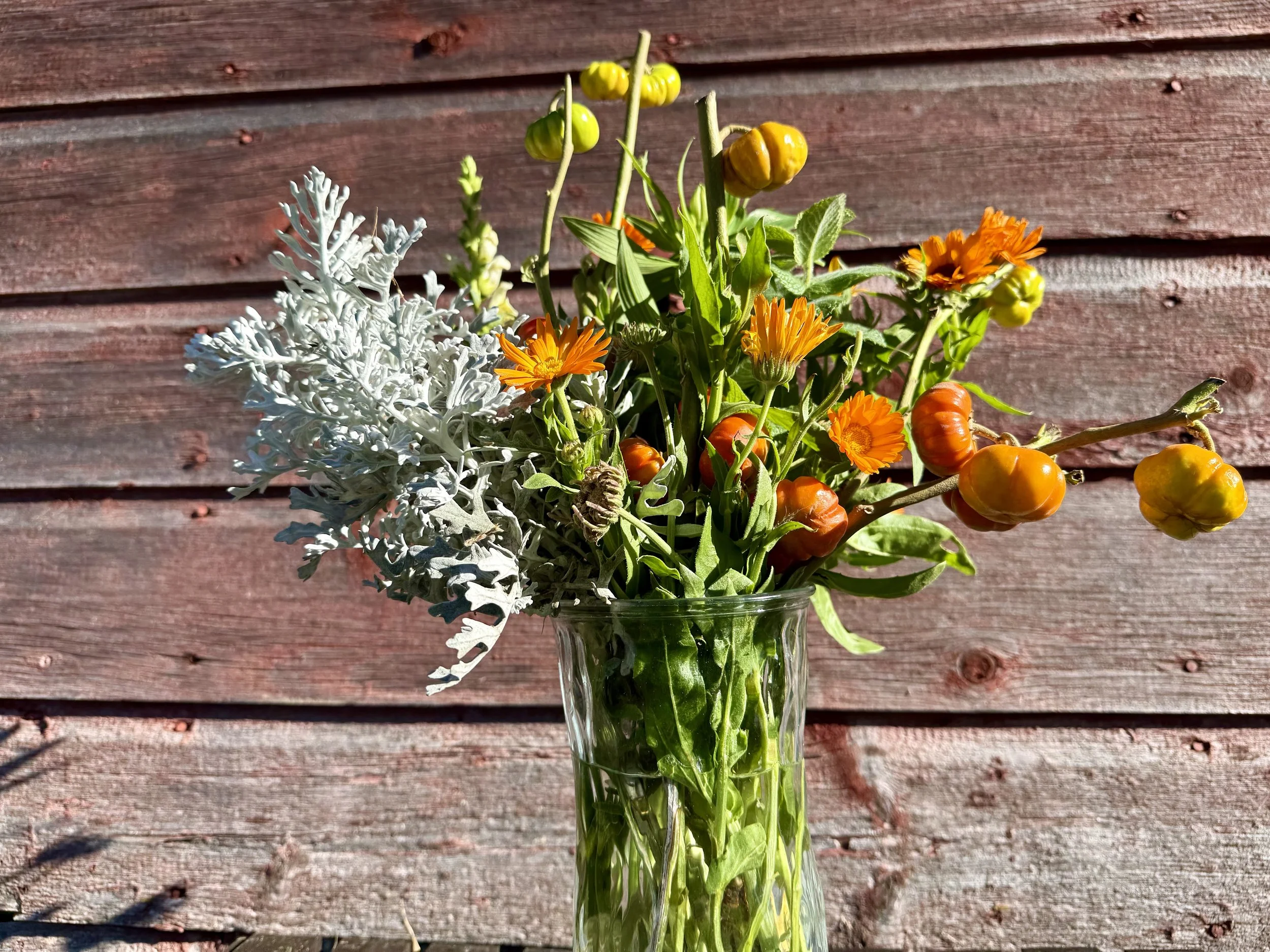
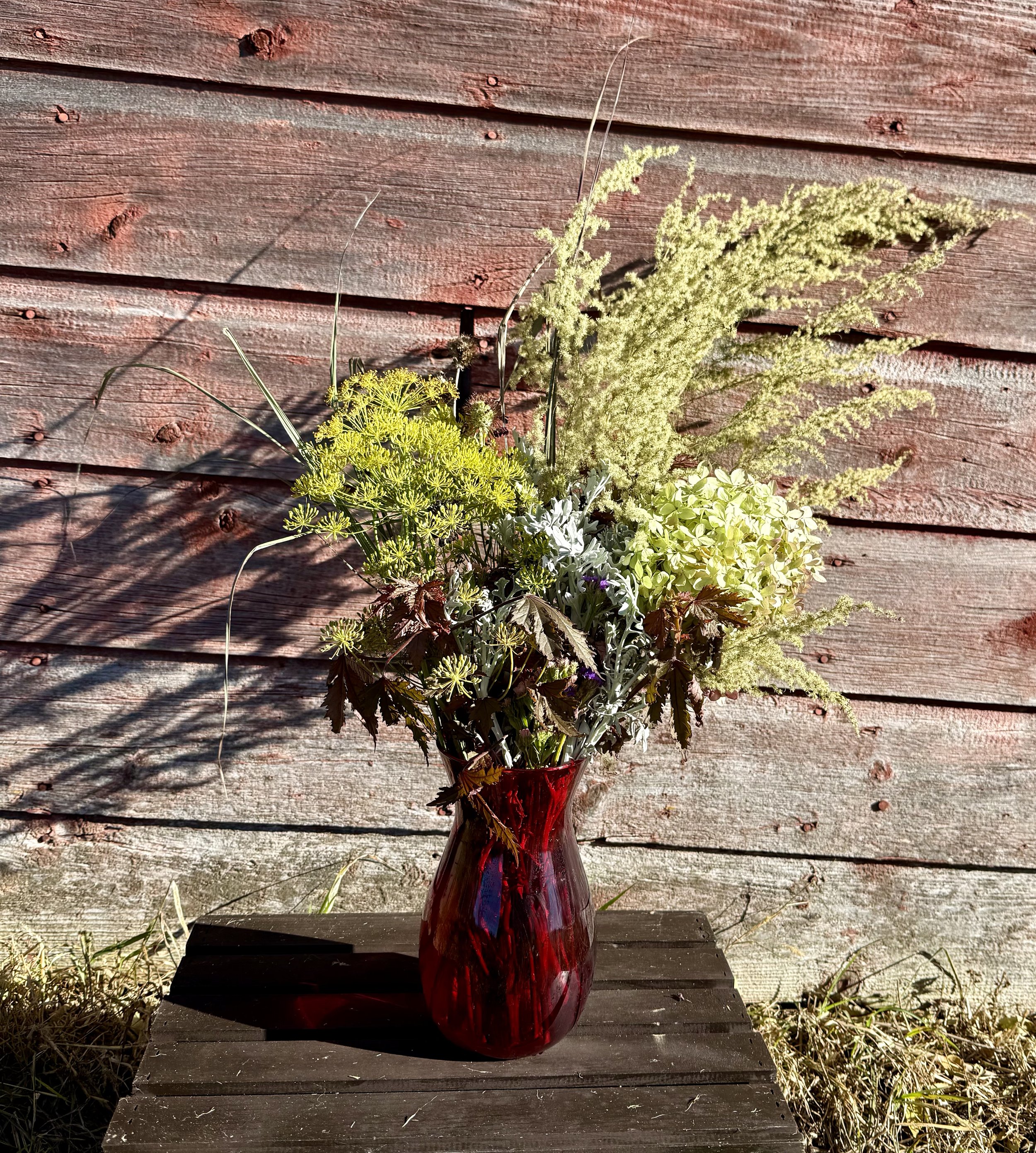
Dusty miller is such an amazing plant to work with. The white, frosty leaves create a striking contrast and pair beautifully with my late hydrangeas and mahogany hibiscus. These tones are a perfect match for any fall wedding or elegant autumn arrangement. Fun fact: the stems can actually be used as cuttings! If you keep the water fresh, they’ll root right in the vase. You can pot them up to overwinter indoors, then harden them off in spring for an early start outside. They’ll even bloom in their second year — I bet you’ve never seen flowers on dusty miller!
Pumpkins, Peppers, and Playful Color
Pumpkins-on-a-stick are another one of Firefly Hill’s unique fall offerings. They’re actually a type of ornamental eggplant that looks like a cross between a tomato and a pumpkin. I like to use them green for a fresh pop of color, or as they ripen into deep red. They also dry beautifully for long-lasting fall arrangements.
The bright red peppers have been another fun addition — they really make a bouquet pop. It can be surprisingly practical to pick them green before a frost and let them ripen in a vase of fresh water indoors. They hold their shape well and bring that lively late-season warmth to the mix.
Calendula — My MVP
Calendula has been my MVP this year. I was looking for a flower to help extend the season — and calendula has done exactly that. It’s one of the first blooms to show up in spring with those cheerful yellow petals, and if you keep the plants trimmed and healthy, they’ll keep producing right up to a deep freeze. I succession plant them so I always have fresh stems.
If you harvest when there’s a mix of buds just opening and others still closed but mature, the flowers can last up to two weeks in a well-maintained vase. Calendula is also a medicinal plant, often used in teas and salves. Those same healing properties can cloud the water in a vase, so it’s important to change the water often.
If you’d like to use them for tea, pick the flowers in the morning just as the dew dries. They can be used fresh or dried.
Herbs and Greens in the Fall Mix
Calendula isn’t the only herb I use in fall bouquets. Lemongrass towers over the arrangements with its fresh-scented spears that add height, movement, and fragrance. Many mint varieties are still in good enough shape to include this time of year, and their subtle aroma makes a bouquet feel alive. Bouquet dill has become one of my favorite umbels to add — it brings a natural, lacy texture that feels right at home with fall colors.
And one of the biggest secrets? Cilantro. When picked at the right stage, it can be a phenomenal filler — arguably even better than baby’s breath.
At the base of many bouquets, I love to tuck in Russian kale. It has a surprisingly long vase life and gives a distinctive texture that grounds the arrangement beautifully.
Peruvian Lilies — Long, Elegant, and Resilient
I’ve been experimenting with Alstroemeria (Peruvian lilies) for the last few years, and I finally found a variety that produces long, beautiful stems. This is another unique offering you won’t likely find from other local growers. With the right care, they can be the showstopper in special bouquets well into October, even after the dahlias have frozen. Florists love them for their vase life — they hold their blooms until the last trace of green fades from the stem. I haven’t scaled them for wholesale yet, but they make their way into my Grower’s Choice bouquets.
Dogfennel — The Whimsical Filler
One of my secret fillers this time of year has been dogfennel (Eupatorium capillifolium). It perfectly fits our whimsical style — the plants grow over eight feet tall, can be cut as needed, and have excellent vase life. When picked in the bud stage, they have a wheat-like texture, and after about a week in the vase, the buds open into soft, silky flowers. The stems add beautiful vertical or airy horizontal movement to a bouquet.
Houseplants in Bouquets
Another secret for late-season arrangements? Houseplants! They’re not scalable, but in a pinch they can add incredible texture and interest. I overwinter plants that are often treated as annuals — like angel wing begonias and scented geraniums. It’s nice to cut them back before tucking them into a sunny window for winter, so why not use those stems in bouquets? In late winter, I take more cuttings to propagate for my annual pots. I also love using greens from a few of my legacy plants that come inside each fall, like bay and variegated ginger.
Milkweed Pods — Sculptural and Surprising
It’s not truly a Firefly Hill bouquet without a touch of our land. We often use native grasses, but we also love to feature seed pods — the overlooked details that tell the story of the season.
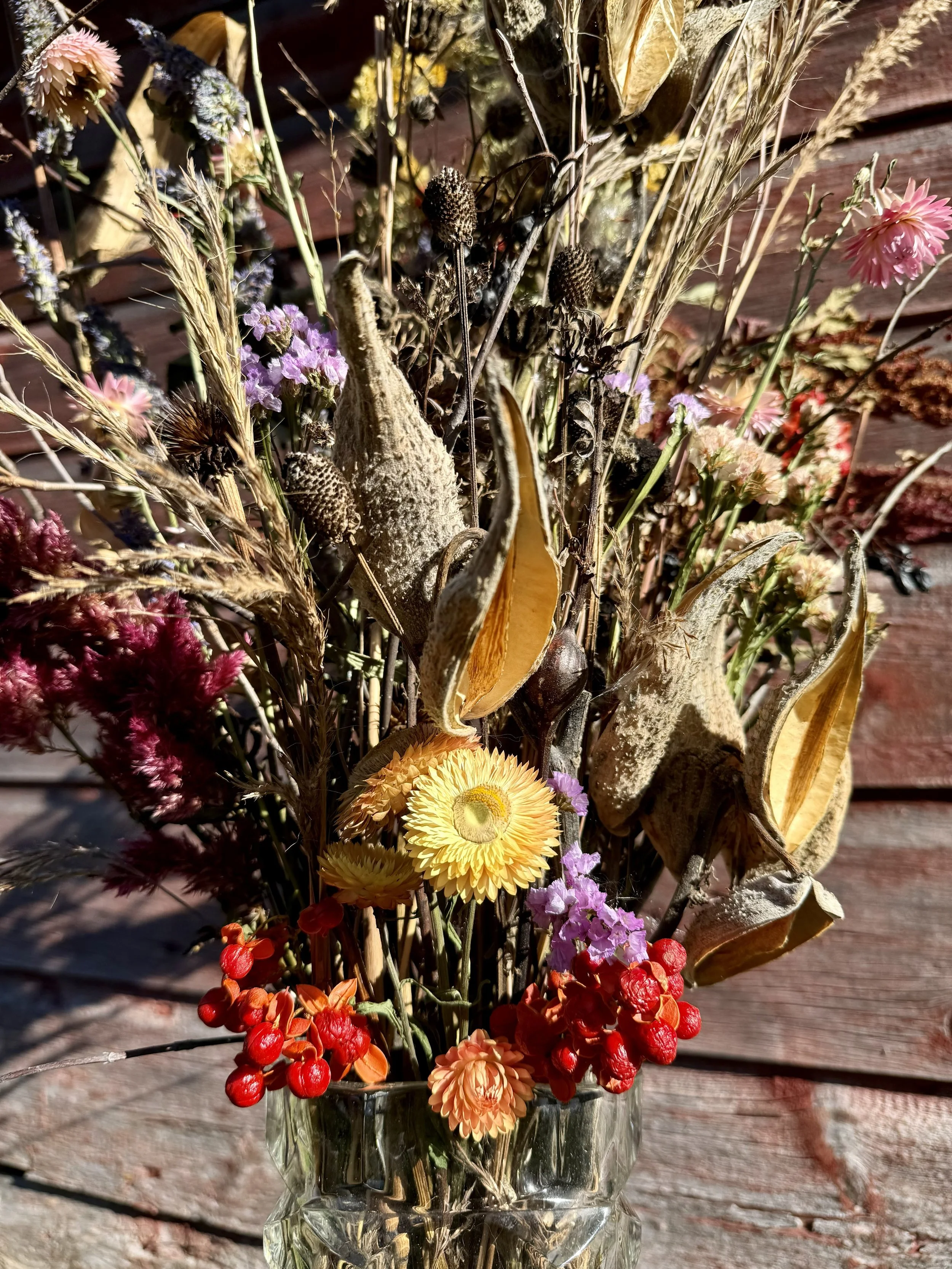
My newest favorite accent stem is milkweed pods. After they release their silky seeds and dry out, they make fascinating additions to mixed or dried bouquets. Each one has its own sculptural shape and soft, natural color that fits perfectly into the late-fall palette. They’re a bridge between fresh and dried design — and the perfect way to close the season on a creative note.
I’ll go over some of these extra additions — the accents and wild materials we use to spice up bouquets or highlight in dried arrangements — in a later post.
Bringing It All Together
By October, when other growers start to till in their beds, I’m still having a blast creating unique bouquets you won’t find anywhere else. These late-season arrangements often look more like something you’d find at a seasoned floral shop than a market bouquet. That’s what Firefly Hill Farm brings to its customers — unique flowers that are cut with care, cured properly, and designed to last.
These bouquets are meant to be loved, even at home, and with the right care they can last for weeks. Firefly Hill Farm’s mission is not only to provide florists and designers with beautiful, fresh, seasonal flowers, but also to give customers another way to buy artfully designed bouquets that reflect our season, our region, and the enduring beauty of locally grown blooms.
And for those of you growing flowers at home — I hope these little secrets inspire you to try new combinations, gather what’s around you, and make your own whimsical arrangements. There’s real joy in noticing what’s still alive in the garden after the frost and turning it into something beautiful.