

Beyond Bees and Butterflies: The Overlooked Insects of Firefly Hill
Oxford Blue Salvia — Flower Bed
Salvia ‘Oxford Blue’ still putting on a beautiful display in November. Its striking purple-blue bracts provide lasting color, while the flowers attract a diversity of beneficial insects.
Firefly Hill Flower Farm | November 2026
Little Bugs, Big Jobs!
Back in June, we shared a little about what our farm grows besides flowers, from fawns and crane colts to caterpillars and moths. As the growing season continued, we kept observing the smaller relationships that help make all that life possible.
Some insects pollinate our flowers. Others hunt the insects that damage them. And many become food for the birds and other wildlife that share our farm. Now, new research from the University of Minnesota is helping us better understand some of those relationships.
And it turns out that all of the flowers we've been growing at Firefly Hill are doing much more than producing beautiful bouquets.
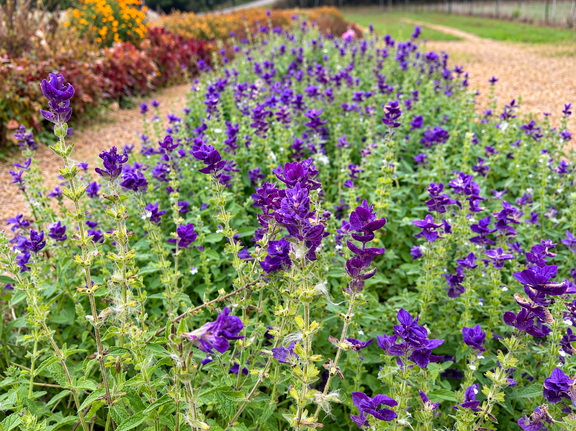
Oxford Blue Salvia — Flower Bed
Salvia ‘Oxford Blue’ still putting on a beautiful display in November. Its striking purple-blue bracts provide lasting color, while the flowers attract a diversity of beneficial insects.
A November Surprise
It's November 4th in northern Wisconsin, and our Salvia ‘Oxford Blue’ is still putting on a beautiful display. Even more remarkable, the entire patch is teeming with little moths moving among the flowers.
One of the interesting things about Oxford Blue is that much of its brilliant blue-purple color doesn't actually come from the flowers themselves. It comes from bracts, modified leaves that surround the small, nectar-producing flowers. Think of a poinsettia at Christmas. Those big red structures we often mistake for flower petals are actually bracts, while the true flowers are the tiny yellow structures in the center. Oxford Blue uses a similar trick, with colorful bracts that remain attractive even as individual flowers fade.
We first discovered Oxford Blue at a garden center last year and decided to trial it this season as both a cut flower and a plant that supports beneficial insects. As it turns out, we weren't the only ones experimenting with it.
The University of Minnesota recently published findings from its Bounty and Blooms research project, which evaluated 53 flower varieties over two growing seasons. Researchers examined both cut-flower performance and the insects visiting each variety. Oxford Blue stood out for attracting an abundance and diversity of beneficial insects.
But what really caught my attention was how many of the other flowers featured in the research we're already growing here at Firefly Hill.
Meet the Hoverflies
One particularly interesting finding involved syrphid flies, better known as hoverflies. They don't get nearly as much attention as bees and butterflies, but these little flies deserve some recognition.
Adult hoverflies visit flowers for nectar and pollen, contributing to pollination. Meanwhile, the larvae of many species feed on aphids and other soft-bodied insects, providing natural pest control. That's two important jobs from one little insect.
The Minnesota researchers documented hoverflies visiting several familiar cut flowers, including Oxford Blue salvia, ageratum, ammi, and feverfew. One of our newer additions is Ammi 'White Dill', with its delicate, umbrella-shaped blooms resembling Queen Anne's lace. We've noticed plenty of small flies visiting its flowers.
We're also growing Matricaria 'Magic Lime Green', a variety of feverfew that the researchers found particularly attractive to adult hoverflies. These are flowers we selected for their beauty and usefulness in bouquets. Discovering their value to beneficial insects gives us even more reasons to grow them.
Ageratum: A Flower That Found Another Job
Ageratum is a particularly good example of how our growing practices have evolved. We originally grew it primarily for bouquets, but processing ageratum can be time-consuming, and over the years, we've found ourselves using less of it in arrangements.
That doesn't mean we've stopped growing it. Quite the opposite. We've allowed additional patches to establish themselves because the butterflies absolutely love it. It readily reseeds in our growing conditions, making it relatively easy to maintain.
The Minnesota researchers found that Ageratum 'Dondo Blue' was among their most frequently visited flowers, attracting hoverflies, small native bees, and other beneficial insects. Ageratum has gradually shifted from being primarily a commercial cut flower to becoming an important habitat plant.
Not every flower needs to end up in a bouquet to earn its place on the farm.
Marigolds: Beautiful Flowers with Several Jobs
We love incorporating marigolds into bouquets, but they also serve another purpose at Firefly Hill. Japanese beetles are attracted to our marigolds, so we use them to concentrate beetle activity in areas where we can more easily pick them off. Because marigolds grow quickly and vigorously, they can tolerate some feeding damage better than more delicate cut flowers.
The Minnesota research revealed another interesting benefit. Although the marigolds studied didn't necessarily attract the greatest number of insects, they supported a surprisingly diverse group of beneficial species, including hoverflies, soldier beetles, and minute pirate bugs. Minute pirate bugs are tiny predators that feed on thrips and other small insects that can damage flowers.
Soldier beetles are another familiar sight around our farm. Adults visit flowers for nectar and pollen, while their larvae prey on small invertebrates. This summer, we photographed a goldenrod soldier beetle visiting goldenrod in our prairie. Goldenrod provides important late-season resources for these insects, alongside many other beneficial flies, beetles, and wasps.
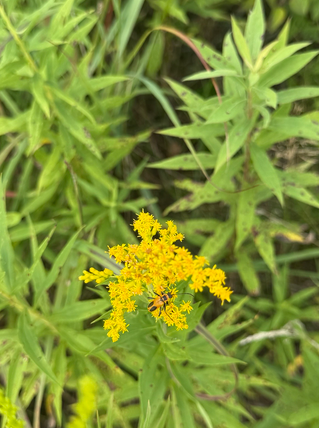
Goldenrod Soldier Beetle — Prairie
A goldenrod soldier beetle visiting goldenrod in our prairie. Adults feed on nectar and pollen, while their larvae prey on other small invertebrates, contributing to natural pest management.
It's a reminder that our cultivated flower beds and surrounding prairie aren't separate systems. They're interconnected parts of the same landscape.
Natural Pest Control Starts Before the Pests Arrive
Beneficial insects don't simply appear when we need them. If we want hoverflies, lady beetles, lacewings, and soldier beetles helping control pests, we need to provide the food and habitat that sustain their populations.
Many of these insects rely on flowers for nectar and pollen, while others need places to reproduce, shelter, or overwinter. Even the insects we consider pests can be an important part of the equation, providing food for their natural predators.
That's why we grow a diversity of flowers at Firefly Hill. Familiar favorites like zinnias provide abundant blooms throughout the summer, while flowering holy basil becomes one of the busiest plants on our farm for bee activity. Other flowers, including ammi, feverfew, and goldenrod, support the smaller, often-overlooked insects that help keep our gardens in balance.
Natural pest management doesn't begin when a pest appears. It begins long before that, with the habitat we create.
Even the Pests Have a Purpose
One interesting finding from the Minnesota research involved amaranth. Unlike some of the other flowers studied, amaranth primarily attracted insects we typically consider pests, including aphids and plant bugs. But we've found that doesn't necessarily make it a problem crop.
At Firefly Hill, we often harvest amaranth foliage earlier in the season, when there's relatively little insect damage. Later, we're primarily harvesting the colorful flower plumes and seed heads for bouquets, stripping away the foliage before arranging them. Some late-season feeding damage doesn't necessarily reduce the crop's value to us.
Meanwhile, aphids provide food for beneficial predators such as hoverfly larvae, lady beetles, and lacewing larvae. Of course, we don't want damaging pest outbreaks, but we also recognize that eliminating every insect isn't the goal. A manageable number of aphids can help sustain the very predators that naturally regulate their populations.
Sometimes making room for nature means accepting a few chewed leaves.
And Then There Are the Bluebirds
Over the past couple of years, we've watched Eastern bluebirds establish themselves around our flower gardens. One of the pleasures of working in the fields is watching them hunt insects among the plants. Those insects are an important part of the bluebirds' diet, particularly when they're raising young.
It's a connection we don't always think about when choosing which flowers to grow. A flower attracts an insect. That insect may pollinate the flower, prey on a pest, or become food for another animal. And the relationship continues.
It's a wonderful reminder that supporting insects isn't simply about having more pollinators. It's about supporting the food web that makes a healthy landscape possible.
More Than a Bouquet
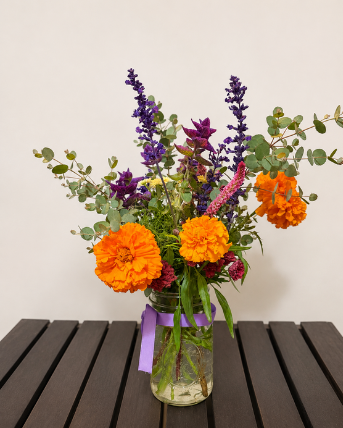
Cut Flower Bouquet — Marigolds and Salvia
Beautiful flowers with more than one purpose. Marigolds, salvia, and other flowers grown at Firefly Hill contribute to our bouquets while supporting insects and the larger ecosystem.
At Firefly Hill, we want our flowers to be beautiful. We want them to perform well in arrangements, hold up after harvesting, and bring enjoyment to the people who receive them. But that's only part of the picture.
We're also interested in what happens when those flowers remain in the field. Which insects visit them? What resources do they provide? How long do they bloom? And how do they contribute to the larger community of wildlife around our farm?
The University of Minnesota research reinforces something we've been observing in our own fields: familiar cut flowers can support an extraordinary diversity of beneficial insects, many of which we rarely consider when designing a pollinator garden. Some help manage pests, others pollinate flowers, and many support the birds and wildlife that share our farm.
A healthy garden isn't necessarily one without pests. It's one where the relationships between plants, insects, and wildlife help maintain a balance.
Back in June, we wrote about the wildlife growing up alongside our flowers. As the season comes to a close, it's worth remembering that the smallest residents of our farm help make that larger world possible.
Sometimes the most valuable thing a flower produces isn't something we can harvest. It's the habitat it creates and the life it supports.
That's what we're working toward at Firefly Hill Flower Farm.
Research and additional reading
University of Minnesota Extension
Adding Cut Flowers to Your Fruit and Vegetable Farm — Research from the Bounty and Blooms project examining cut-flower production and beneficial-insect visitation.
University of Wisconsin–Madison Extension
Plant Flowers to Encourage Beneficial Insects — Guidance on plants that support natural enemies of garden pests.
University of Wisconsin–Madison Extension
Goldenrod Soldier Beetle — Information about soldier beetle biology and their roles in garden ecosystems.